

The Aeon Herald / HISTORICAL EDITION
Aimee Semple McPherson Dies in Oakland; Inquiry Continues
The death of Angelus Temple’s founder leaves an inquiry in Oakland and a great religious institution in Los Angeles awaiting answers.
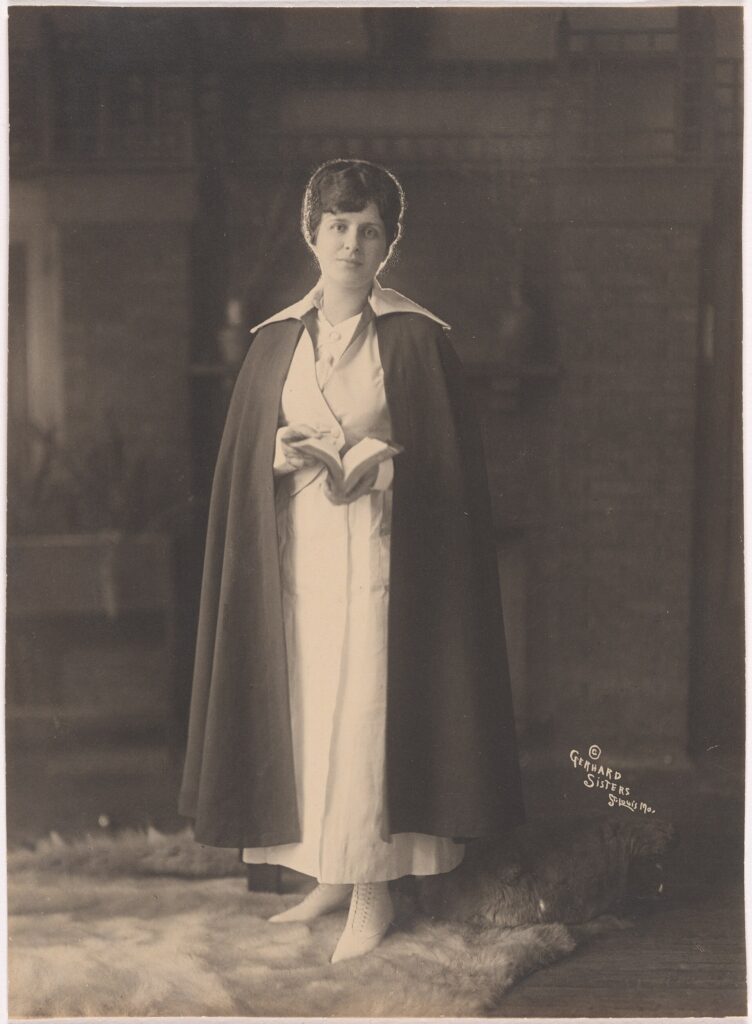
OAKLAND, Sept. 28.— Aimee Semple McPherson, founder of Angelus Temple and one of the country's best-known evangelists, died in a hotel here yesterday at fifty-three. An autopsy has not established the cause, and further laboratory examination and an inquest are planned. The news interrupted an Oakland engagement and sent attention back to the great domed church beside Echo Park, from which her preaching has reached congregations in Los Angeles and listeners across the country.
Mrs. McPherson was discovered in distress by her son, and efforts to revive her failed. Early reports ascribed the death to a heart attack; the subsequent examination left the cause unsettled. Officials are also examining sleeping medicine found in connection with the case. No final medical finding has been announced.
The final Oakland engagement followed the pattern of a career conducted with an eye for public attention. Long before Angelus Temple was built, she had carried her ministry from place to place in tent meetings and revival campaigns. Establishing a permanent pulpit did not end the travelling. Oakland was another stop on a road she had followed for years.
Canadian-born, Mrs. McPherson had undertaken missionary work in China before returning to North America. By 1916 she was conducting an itinerant ministry of her own. She settled in Los Angeles in 1918 and raised funds for the church that opened in 1923. It placed a remarkable religious enterprise on Glendale Boulevard: an auditorium seating approximately fifty-three hundred, with two balconies and a stage suited to the large illustrated sermons that became her specialty.
The temple's appointments help explain why its services drew attention from people unaccustomed to revival meetings. Clouds painted within the dome supplied an indoor sky. Stained glass, music and carefully arranged scenery enlarged the setting around the pulpit. Mrs. McPherson could appear in costume or use a familiar dramatic situation to introduce a lesson. A policewoman's uniform or a boxing ring brought the language of the street and theater into religious exhortation. Her followers regarded such methods as instruments for carrying the Gospel to a wider audience.
Radio enlarged that audience still further. KFSG, the temple's station, has been broadcasting for twenty years. Services heard in the auditorium could also be received at home, and recorded sermons carried her preaching to other stations. Through the Depression and into the war the microphone remained a principal part of the ministry. Listeners who had never found a seat under the dome knew the evangelist by her voice.
Behind the platform and broadcasting work stood a substantial relief organization. The temple maintained a commissary for food and clothing, and volunteers supported its activities with donations and labor. Its work extended to people affected by the Long Beach earthquake and the Southern California floods. In the hard years a meal supplied by the temple could be a more immediate introduction to the institution than any sermon. Religious instruction and the needs of the hungry occupied adjoining places in its daily business.
The Foursquare undertaking also trained ministers and missionaries, including women, and sent them into congregations beyond Los Angeles. War service brought another use for the organization: broadcasts and public appearances dealing with blackouts, rationing and the sale of war bonds. The temple thus combined the duties of a church, a school, a relief agency and a broadcasting establishment, all closely associated with one commanding personality.
Those institutions remain as the inquiry proceeds here. Mrs. McPherson's sudden death leaves her followers without the preacher who gave them their common name and leaves Los Angeles without one of its most conspicuous voices. The medical questions are still before the authorities; the immediate fact for the congregation is an empty pulpit.
Sources & further reading
- Autopsy report and inquest inquiry, page 1— Associated Press, Herald and News, Klamath Falls; September 28, 1944.
- Plan Probe of Aimee’s Death, page 5— Associated Press, Lethbridge Herald; September 28, 1944.
- Aimee Semple McPherson— National Park Service; Undated official biography; accessed November 9, 2026.
- Angelus Temple National Historic Landmark nomination— Page Putnam Miller, Jill S. Topolski and Vernon Horn, National Coordinating Committee for the Promotion of History; November 13, 1991.
- KFSG Los Angeles: Depression, War and the Legacy— Jim Hilliker, Radio Heritage Foundation; 2003.
- Our History— Foursquare Canada; Undated institutional history; accessed November 9, 2026.