LOS ANGELES · EST. 1932 Friday, November 20, 2026 · Pacific editionNewsroom
NUNTIA LIBERA
PER MUNDOS ET SAECULA
Los Angeles

Checking the weather…

Change locationLos Angeles

YOUR EDITION / ONE LOCATION

Make yourself at home

One choice sets your weather, local reporting and regional defaults across the Herald. You can refine each section afterward.

Use your approximate location for local news and weather?

Only Yes sends your IP address to IPWhois to find an approximate city. No keeps Los Angeles.

Search worldwide by city, state or country.

    Selected: Los Angeles.

    City search: Open-Meteo · GeoNames · CC BY 4.0

    MET NorwayCC BY 4.0

    The Aeon Herald / HISTORICAL EDITION

    Soviet Nuclear Accident Sends Radiation Beyond Borders

    Chernobyl's emergency comes into view after unusual readings in Scandinavia and a Soviet acknowledgement.
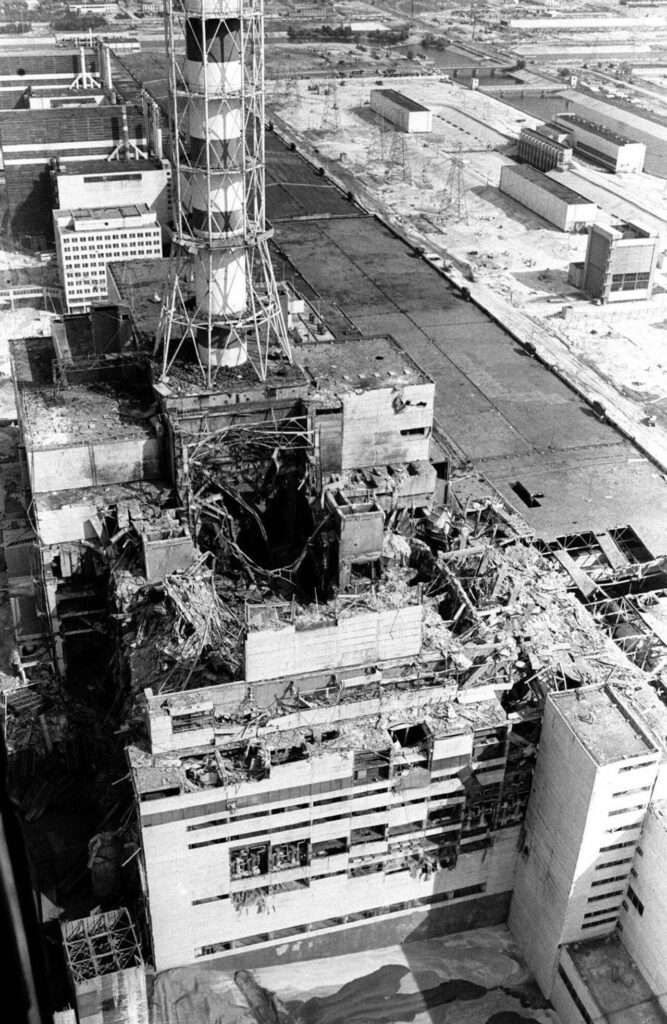
    Destroyed Chernobyl reactor, photographed from a helicopter several months after the accident in 1986. Later aftermath view supplied through IAEA Imagebank / USFCRFC.
    IMAGE / Ukrainian Society for Friendship and Cultural Relations with Foreign Countries / IAEA Imagebank
    The damaged Chernobyl reactor, photographed from a helicopter on April 27, 1986, the day after the explosion. Ukrainian Society for Friendship and Cultural Relations with Foreign Countries / IAEA Imagebank, CC BY-SA 2.0. Display crop.
    Unlocked by patron

    STOCKHOLM, April 30—A nuclear accident at Chernobyl in the Soviet Union has released radioactive material across national borders, prompting measurements and public concern throughout parts of Europe. Soviet authorities acknowledged the accident on Monday after abnormal radiation readings were detected in Sweden.

    The damaged installation is in Ukraine, near the town of Pripyat. Information about the sequence of events, the condition of the reactor and the exposure of workers and residents remains incomplete. Reports circulating outside the Soviet Union vary sharply, making independent measurements particularly important.

    The presence of material far from the site demonstrates that the emergency cannot be treated as a purely local affair. Weather conditions, the movement of the plume and contamination of food and water will require continuing observation. A single reading does not describe the dose received by every person in a region.

    Governments need timely information from the source as well as their own monitoring. The accident has exposed the inadequacy of learning about a neighbouring country's nuclear emergency through instruments detecting what has already crossed the border.

    Sources & further reading

    THE READING ROOM

    Discussion

    Conversations are reviewed by the newsroom before they appear. Your display name and approved comment are public.

    No published comments yet.

    The newsroom has closed new comments for this record.

    Choose what this browser remembers, whether analytics may load and which external widgets can load. Necessary sign-in and security cookies are controlled by your browser.

    Analytics is optional and off until allowed. Disabling analytics stops future loading and clears accessible analytics cookies. Disabling a preference clears its local data. Learning remains a separate opt-in in Your Interests. Disabling external widgets stops future loading; remove existing provider cookies through your browser.

    Read the Cookie Policy