The Aeon Herald / HISTORICAL EDITION
The Proxima Signal Leads Investigators Back to Earth
Breakthrough Listen’s detailed examination of blc1 finds human-generated interference behind an initially intriguing radio event.
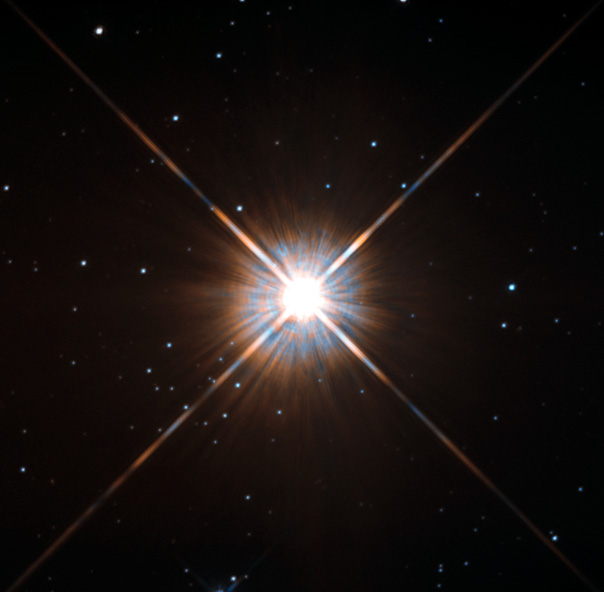
A radio signal that survived early screening during observations toward Proxima Centauri has been traced to interference from human technology. Two papers published Monday describe how Breakthrough Listen investigators examined blc1 and found that its apparent resemblance to a possible extraterrestrial transmitter did not survive closer testing.
The signal appeared in Parkes telescope data recorded on April 29, 2019. It occupied a narrow frequency range near 982 megahertz and drifted in frequency over time. In the initial analysis it appeared during observations toward Proxima, while being absent from the alternating comparison pointings used to check for local interference.

Those characteristics justified investigation. They were not sufficient to locate a transmitter at the star. A signal can survive an automated filter because it is unusual among millions of detections, including unusual forms of interference.
Sofia Sheikh and colleagues examined a wider set of observations and found dozens of signals with related shapes and frequency relationships. Their spacing was consistent with frequencies associated with electronic clock oscillators. The analysis identifies blc1 as an intermodulation product: a signal produced through interactions among human-generated emissions.
The specific piece of equipment responsible has not been identified. That remaining uncertainty does not restore the Proxima interpretation; the related interference provides a physical explanation for why the signal passed the initial tests. The detection paper and its companion analysis both conclude that blc1 is not an extraterrestrial technosignature.
The case has also produced a more explicit verification framework for future signals. It includes checking weaker emissions in comparison observations, examining instrument behavior and looking for related interference across the recorded band. The value of the exercise lies in a search capable of investigating an exciting result closely enough to reject it when the evidence requires.
Sources & further reading
- A Radio Technosignature Search Towards Proxima Centauri Resulting in a Signal of Interest — Shane Smith and colleagues / Nature Astronomy; October 25, 2021.
- Analysis of the Breakthrough Listen Signal of Interest blc1 with a Technosignature Verification Framework — Sofia Z. Sheikh and colleagues / Nature Astronomy; October 25, 2021.
- Breakthrough Listen Releases Analysis of Previously Detected Signal — Breakthrough Initiatives / institutional announcement; October 25, 2021.
Related Herald reporting
- A More Sensitive Search Leaves the Wow! Signal Unanswered — Adrian Mercer, 2001-01-12.
- A Claim of Signals in 234 Stars Faces an Independent Test — Eric Bennett, 2016-10-12.
- Hubble Telescope Released Into Orbit — Adrian Mercer, 1990-04-26.
- The Radio Burst That Came Back Challenges One-Time Explanations — Sarah Nguyen, 2016-03-03.
- A Millisecond Radio Flash Opens a Question in the Distant Universe — Adrian Mercer, 2007-09-29.
- Seven Dyson Sphere Candidates Face a Test of What Lies Behind Them — Sarah Nguyen, 2024-05-24.