The Aeon Herald / HISTORICAL EDITION
Another Dimming Star Comes With a Disk—and a Different Puzzle
EPIC 204278916 loses up to 65 percent of its observed light, with its youth and surrounding material offering important clues.
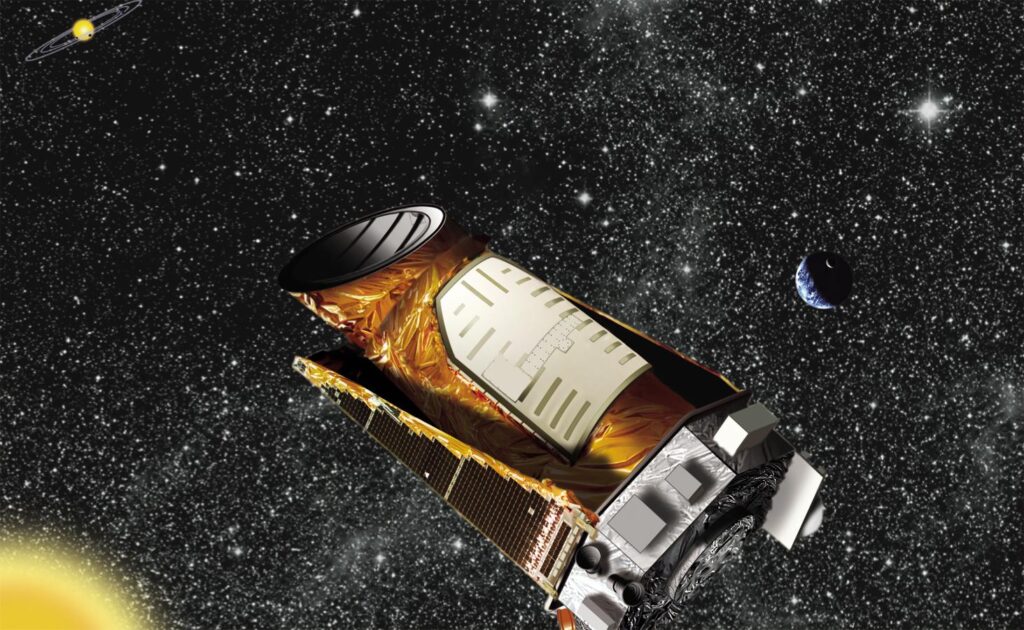
A young star observed during Kepler’s K2 mission has displayed irregular drops of up to 65 percent in measured brightness. The episodes make EPIC 204278916 a striking case of a star being obscured, but observations of a surrounding disk give astronomers natural explanations to examine.
Simone Scaringi and colleagues report that the deep dipping activity occupies about 25 days of a 78.8-day observing sequence. Outside that interval, a more regular variation is consistent with the star’s rotation. The percentage describes light lost from the telescope’s view; it is not a measurement of energy disappearing from the star.
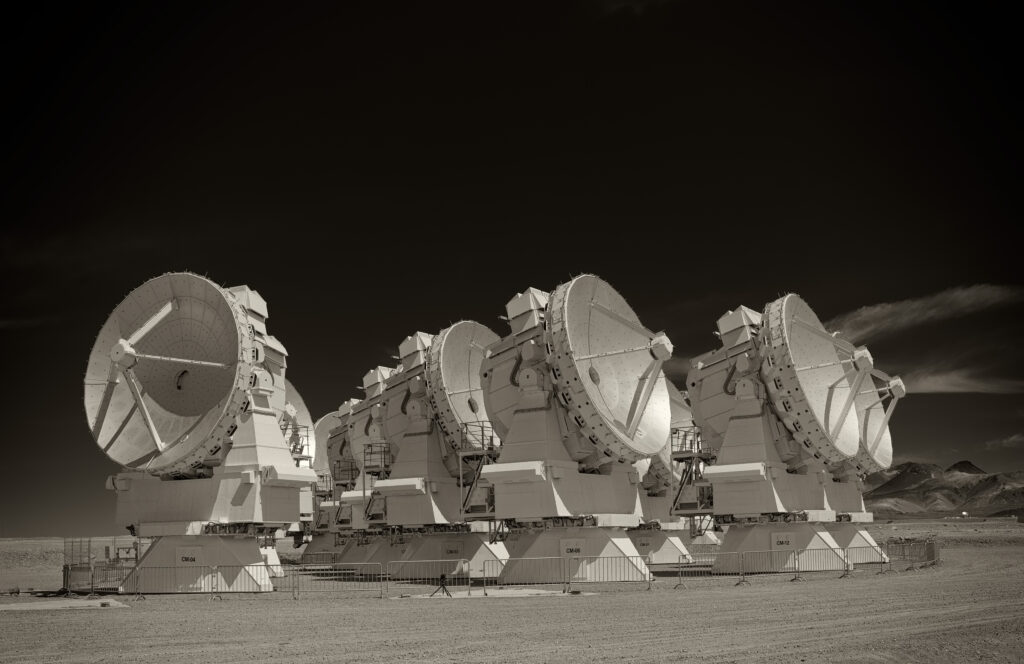
The object is a young, low-mass star that has not yet reached the main sequence. ALMA observations resolve a tilted disk around it. The authors propose a warped inner disk edge or comet-like bodies crossing the line of sight as possible causes of the irregular events.
The distinction between measuring a dip and identifying its cause matters. Kepler’s light sensor records changes in brightness, and ordinary planetary transits can reveal a planet’s size and orbital period. More complicated material can produce a more complicated light curve. Dimming alone does not specify what has crossed the view.
The report adds a useful comparison for other peculiar stars without making every deep eclipse the same phenomenon. Here, the system’s youth and observed disk are evidence that any explanation must address. Further observations can test how that material is arranged and whether the unusual sequence returns.
Sources & further reading
- The Peculiar Dipping Events in the Disk-Bearing Young-Stellar Object EPIC 204278916 — S. Scaringi, C. F. Manara, S. A. Barenfeld and colleagues / Monthly Notices of the Royal Astronomical Society; Preprint August 25, 2016; online publication August 26, 2016.
- Kepler’s Six Years in Science (and Counting) — NASA / Kepler mission; May 11, 2015.
- ALMA image of the disk around EPIC 204278916, Figure 5 — S. Scaringi and colleagues, 2016 preprint, page 5. The source paper contains the original intensity map.
Related Herald reporting
- An Erratically Dimming Star Draws a Search for Natural—and Artificial—Causes — Eric Bennett, 2015-10-20.
- A Star Seen Through Saturn’s Rings Reveals Waves and Narrow Gaps — Paul Norton, 1982-01-30.
- A Claim of Signals in 234 Stars Faces an Independent Test — Eric Bennett, 2016-10-12.
- Seven Dyson Sphere Candidates Face a Test of What Lies Behind Them — Sarah Nguyen, 2024-05-24.
- A More Sensitive Search Leaves the Wow! Signal Unanswered — Adrian Mercer, 2001-01-12.
- A Giant Star Nearly Vanishes Behind an Unseen Obscurer — Sarah Nguyen, 2021-06-12.