The Aeon Herald / HISTORICAL EDITION
The Radio Burst That Came Back Challenges One-Time Explanations
Ten additional pulses from FRB 121102 show that its source survives the outbursts, changing the question astronomers must answer.
Astronomers have found a fast radio burst that repeats. Ten additional pulses detected with the Arecibo telescope come from the same direction and have the same propagation signature as the earlier event designated FRB 121102, providing a decisive new constraint on the source of these brief cosmic flashes.
The finding, reported by Laura Spitler and colleagues in Nature, means that this source survives the events producing its bursts. An explanation in which the entire object destroys itself once cannot by itself account for the sequence. The observation does not require every fast radio burst to share the same origin.
Each pulse lasts only milliseconds. The new events also display changing spectral shapes, with differences appearing over minutes or less. Those variations give researchers additional properties to explain alongside the source’s enormous apparent power and its ability to erupt again.
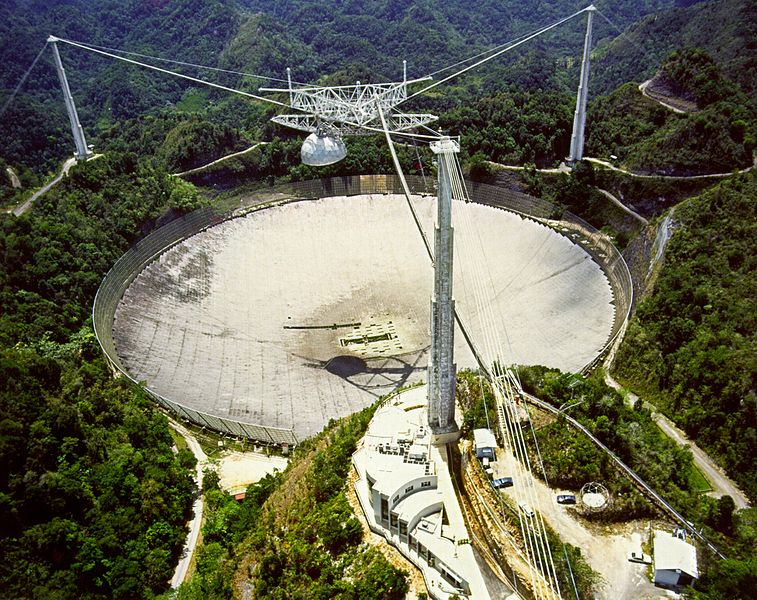
The team’s monitoring used the 305-meter Arecibo radio telescope in Puerto Rico. According to the Max Planck Institute for Radio Astronomy, Paul Scholz recognized the additional events while examining the monitoring results last November. Continued observation, rather than a single unusually bright detection, exposed the behavior that changed the interpretation.
A young, strongly magnetized neutron star outside the Milky Way is among the models supported by the researchers. It remains an interpretation of the radio evidence. The observations do not yet supply a detailed portrait of the emitting object or settle the physical mechanism that releases the pulses.
Repetition should make further investigation more productive: astronomers can return to the same direction and coordinate radio observations with other kinds of telescopes. Scientists now know that at least one source can produce these extraordinary flashes more than once—and any explanation for this source must allow it to do so.
Sources & further reading
- A Repeating Fast Radio Burst — L. G. Spitler, P. Scholz, J. W. T. Hessels and colleagues / Nature; Published online March 2, 2016; Nature issue dated March 3, 2016.
- Mysterious cosmic radio bursts found to repeat — Max Planck Institute for Radio Astronomy / institutional news release; March 2, 2016.
Related Herald reporting
- A Millisecond Radio Flash Opens a Question in the Distant Universe — Adrian Mercer, 2007-09-29.
- A More Sensitive Search Leaves the Wow! Signal Unanswered — Adrian Mercer, 2001-01-12.
- The Proxima Signal Leads Investigators Back to Earth — Sarah Nguyen, 2021-10-26.