

The Aeon Herald / HISTORICAL EDITION
Native Students Press UCLA to Make Their History Part of the University
The American Indian Studies Center grows from demands for a curriculum and research institution responsive to Native communities.
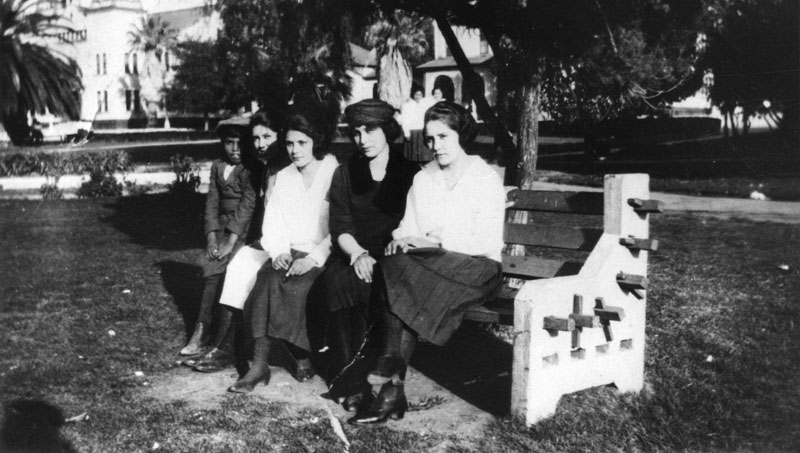
Sherman Institute students, circa 1920. This earlier federal-school photograph supplies educational context for the later demand for Native-directed scholarship; UCLA’s new center is not pictured. Credit: Photographer uncredited; Los Angeles Public Library, via Wikimedia Commons. Original source. Public domain in the United States; Commons PD-US record for the circa-1920 photograph.
LOS ANGELES, Dec. 7.—Native students, faculty and community members have pressed UCLA to establish a center devoted to American Indian history and culture. The American Indian Studies Center’s beginnings this year place a question of public knowledge inside the university: who decides how Native life is studied, and who participates in that work?
A center can support research, teaching and the collection of materials that students have had difficulty finding within established courses. Its importance also lies in the relationship it builds with Native people beyond campus. A subject studied at the university is also a living set of communities, governments and obligations.
For students, the demand concerns the education they receive and the terms on which they are expected to belong. A curriculum that repeatedly places Native people in a vanished past fails to account for families and political institutions still present in Southern California.
Los Angeles supplies a particularly important setting. The university stands within an Indigenous homeland and serves a city with residents from many Native nations. Those relationships require specific knowledge; they cannot be adequately addressed through a single generalized picture of Indian culture.
The center’s future will depend on personnel, resources and the ability to sustain its connection with students and communities. Establishment is a beginning rather than a guarantee of influence within the university.
The demands at UCLA belong beside political organizing elsewhere in the country. Control over an account of the past affects the questions a public institution can recognize in the present. Students are asking to participate in making that account, and to have their work treated as scholarship.
Explore the Story
Sources & further reading.
Related Herald reporting
- Native Delegates Bring Treaties and Sovereignty to the Poor People’s Campaign — Thomas Navarro, 1968-06-20.
- Alcatraz Occupation Ends; the Questions It Raised Remain on the Mainland — Thomas Navarro, 1971-06-12.
- Blue Lake Return Gives Land to a Policy of Self-Determination — Thomas Navarro, 1970-12-16.
- Indian Education Act Opens a Greater Place for Parents and Community Priorities — Katherine “Kate” Romero, 1972-06-25.
- Indian Child Welfare Act Sets Standards Against the Breakup of Native Families — Katherine “Kate” Romero, 1978-11-09.
- The Federal Relocation Promise Meets the Cost of Living in Los Angeles — Lillian Marsh, 1956-08-12.
- At Sherman Institute, Schooling Reaches Into the Life of the Family — Beatrice Lyle, 1933-11-19.
- American Indian Movement Begins With the Needs of Native City Residents — Thomas Navarro, 1968-12-22.
Join the conversation