

The Aeon Herald / HISTORICAL EDITION
At Sherman Institute, Schooling Reaches Into the Life of the Family
Riverside’s federal boarding school brings Native students into a system intended to shape work, language and life away from home.
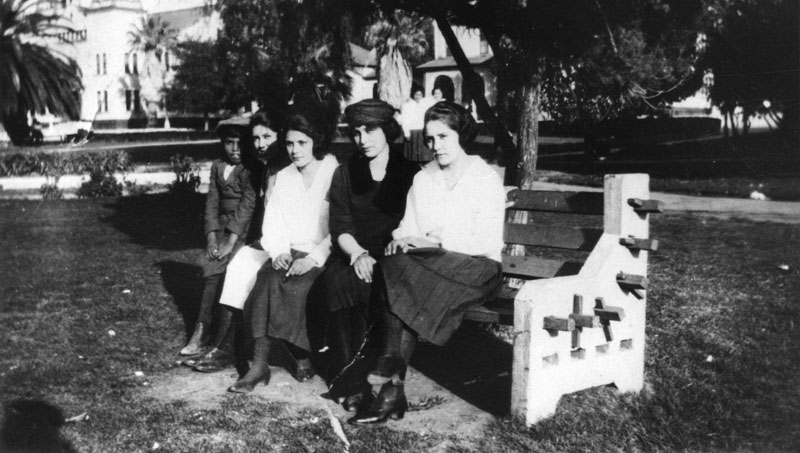
Students at Sherman Institute, circa 1920. This earlier photograph places federal boarding-school education in view; it does not depict a particular incident in the edition year. Credit: Photographer uncredited; Los Angeles Public Library, via Wikimedia Commons. Original source. Public domain in the United States; Commons PD-US record for the circa-1920 photograph.
RIVERSIDE, Nov. 19.—At Sherman Institute, the school day belongs to an institution that takes charge of more than lessons. Native students live as well as study here. Their families may be far from Riverside, and the distance between the school and home is measured in language and custom as well as miles.
The institute is a federal boarding school, moved to Riverside from Perris three decades ago. Academic instruction shares its place with vocational and domestic training. The arrangement prepares students for particular kinds of employment while placing much of their daily life under school authority.
It is possible to admire a student’s skill and still ask who has decided the purpose of that instruction. Training in a trade may offer a livelihood. It may also narrow the future imagined for a young person when domestic service or manual work takes precedence over other ambitions.
The photographs and school records show organized classes, workrooms and students gathered for institutional occasions. They cannot by themselves tell a reader what a child misses, what a family wants, or which parts of home life survive the school’s expectations. An orderly group photograph is an incomplete account of education.
For parents, the question includes the terms on which their children return. A school that expects a student to leave language and community behind makes a claim extending well beyond its classrooms. Families have an interest in education that strengthens a child’s capacities without requiring the surrender of belonging.
Sherman should therefore be reported through the lives and choices of its students as well as the reports of its administrators. Their education is a public responsibility; their identities are not the institution’s property.
Explore the Story
Sources & further reading.
Related Herald reporting
- A City’s Water Project Sends Kumeyaay Families Toward a New Home — Henry Pritchard, 1932-12-31.
- New Indian Law Halts Allotment and Opens a Different Course for Tribal Government — Samuel Voss, 1934-06-19.
- Tribal Delegates Form a National Congress to Defend Their Rights — Edward Hensley, 1944-11-19.
- The Federal Relocation Promise Meets the Cost of Living in Los Angeles — Lillian Marsh, 1956-08-12.
- Native Students Press UCLA to Make Their History Part of the University — Thomas Navarro, 1969-12-07.
- Indian Education Act Opens a Greater Place for Parents and Community Priorities — Katherine “Kate” Romero, 1972-06-25.
- Indian Child Welfare Act Sets Standards Against the Breakup of Native Families — Katherine “Kate” Romero, 1978-11-09.
- San Diego’s Native Community Establishes an Urban Health Center — Katherine “Kate” Romero, 1979-12-09.
Join the conversation