

The Aeon Herald / HISTORICAL EDITION
A City’s Water Project Sends Kumeyaay Families Toward a New Home
The purchase of Barona Ranch begins a new chapter for families displaced from Capitan Grande by San Diego’s reservoir plans.
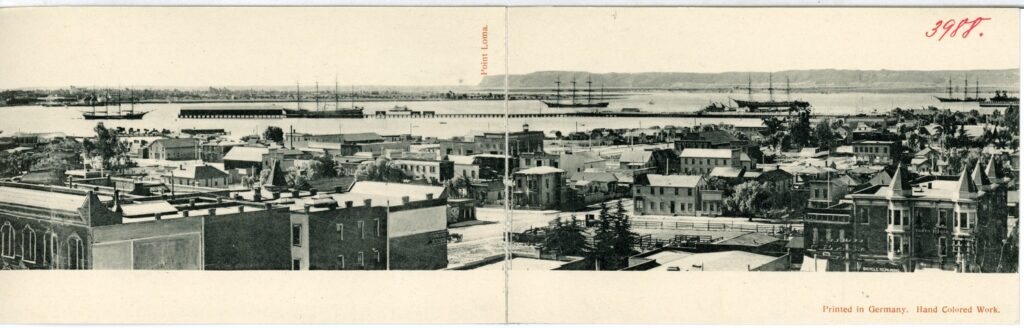
San Diego and its bay in a panoramic postcard published in 1903. Earlier geographical context for the city whose expansion affected nearby Native communities. Credit: Brück & Sohn Kunstverlag, via Wikimedia Commons. Original source. CC0 1.0 dedication by the contributing publisher; historic 1903 postcard. CC0.
SAN DIEGO COUNTY, Dec. 31.—The growing city’s demand for water is changing the country beyond its streets. For Kumeyaay families whose homes lie within the Capitan Grande reservation, the El Capitan reservoir project reaches into a settled landscape of houses, cultivated ground and family connections. A proposed water supply for San Diego carries the immediate question of where those families are to live.
This year a group of Capitan Grande people purchased Barona Ranch with money arising from the acquisition of their reservation lands. The move establishes a new home near Lakeside, but purchase papers cannot transfer the familiar arrangement of a community. Roads, water, homes and places of gathering must be made to serve people whose former home is being claimed for another purpose.
The families have acted together in securing the ranch. That decision deserves attention alongside the city’s engineering plans. A reservation is inhabited country, and its residents are making choices under circumstances that San Diego’s expansion has imposed upon them.
The larger Capitan Grande community does not have a single, completed answer to removal. The needs and decisions of families must be followed separately. It would be premature to treat the purchase of one property as a settlement of every household’s future.
A city measures a reservoir by its expected capacity. For the people required to leave, the accounting also includes access to fields, dependable water at the new location, and the distance between relatives. Those matters will outlast the day a deed is signed.
Barona’s beginning belongs in the record of the water project as surely as the plans for the dam. The next reports should ask how the new community is supplied and what obligations remain to the people whose land makes the city’s scheme possible.
Explore the Story
Sources & further reading.
Related Herald reporting
- At Sherman Institute, Schooling Reaches Into the Life of the Family — Beatrice Lyle, 1933-11-19.
- New Indian Law Halts Allotment and Opens a Different Course for Tribal Government — Samuel Voss, 1934-06-19.
- Tribal Delegates Form a National Congress to Defend Their Rights — Edward Hensley, 1944-11-19.
- An Acre in Altadena Gives Land Return a Local Address — Elena Reyes, 2022-10-16.
- Longest Walk Reaches Washington With Treaty Rights at Its Center — Katherine “Kate” Romero, 1978-07-23.
- San Diego’s Native Community Establishes an Urban Health Center — Katherine “Kate” Romero, 1979-12-09.
Join the conversation