

The Aeon Herald / HISTORICAL EDITION
New Indian Law Halts Allotment and Opens a Different Course for Tribal Government
The Indian Reorganization Act changes federal land policy and provides a framework for tribal organization, with important choices still ahead.
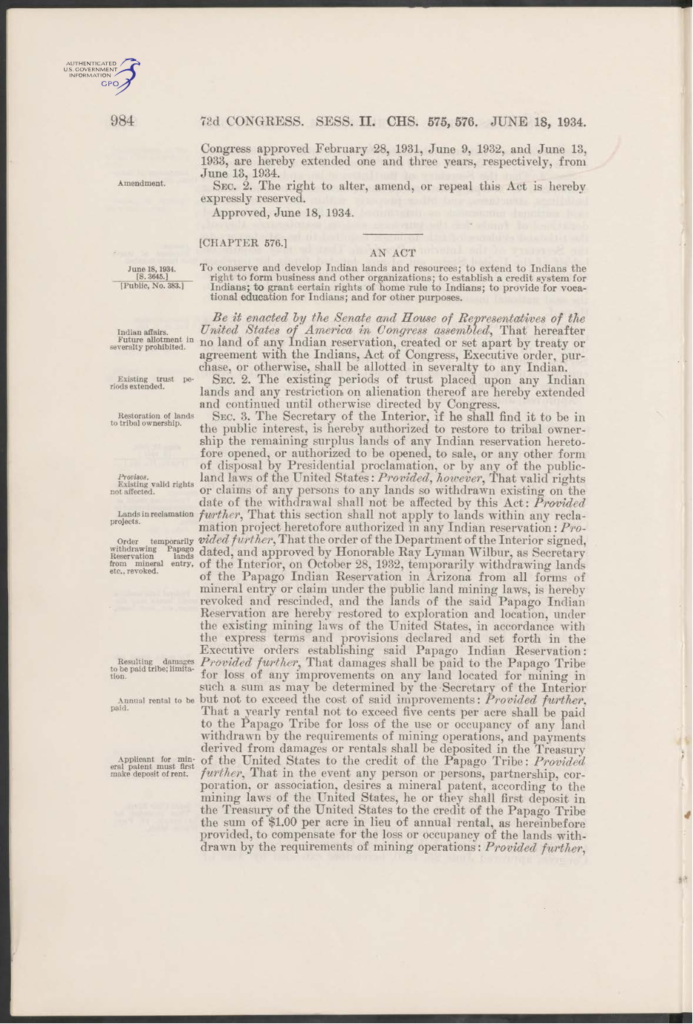
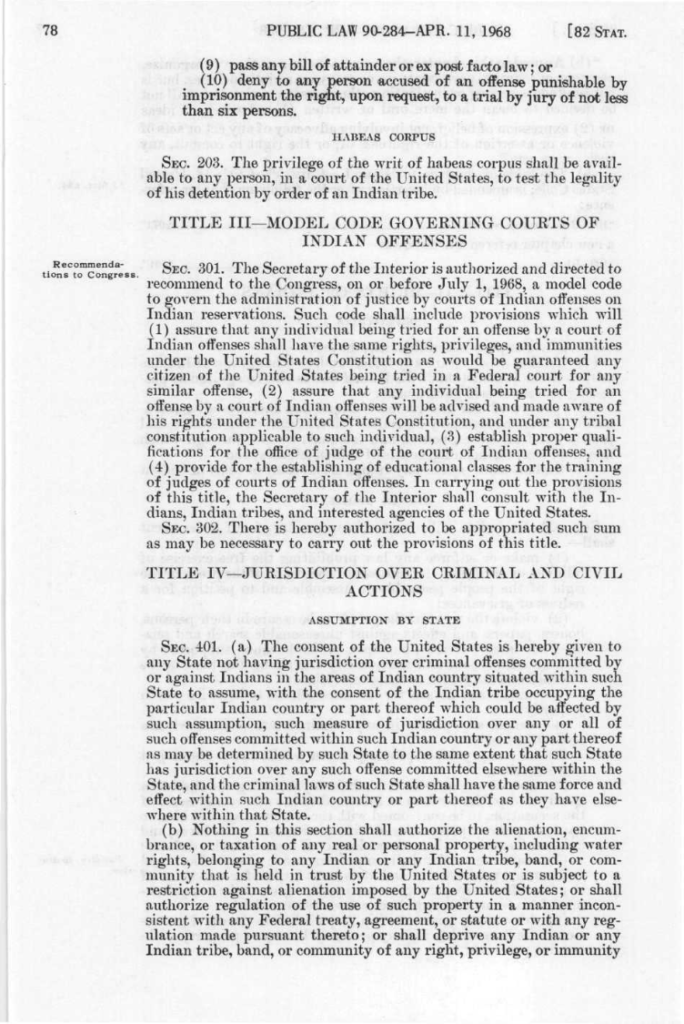
Facsimile from the Indian Reorganization Act, June 18, 1934, reproduced from the U.S. Statutes at Large. The original statutory page is shown without alteration. Credit: U.S. Congress / Government Publishing Office, GovInfo. Original source. Public domain: official U.S. federal government publication and statutory text. Public domain.
WASHINGTON, June 19.—President Roosevelt yesterday signed legislation ending further allotment of reservation lands under the general allotment system and opening a new course in federal Indian affairs. The measure allows steps toward conserving tribal land and recognizes a place for tribal organization in decisions long dominated by federal administration.
Allotment divided communal holdings into individual parcels and exposed land outside those allotments to disposal. The new act halts that division, continues existing trust periods and authorizes the acquisition of land for Indians. These provisions address the land base on which a community must support itself.
The law also provides machinery for tribes to organize under constitutions and bylaws, subject to federal approval. Organization under the act is not simply a matter of exchanging one official form for another. It raises questions about existing institutions, the distribution of authority and the conditions Washington attaches to recognition of a governing arrangement.
A loan fund and provisions concerning economic development and education accompany the governmental changes. Their value will depend on administration and on the ability of communities to use them for their own purposes. Authorization is the beginning of that work.
The act includes a means for reservation residents to reject its application through a vote. That choice makes it particularly important to explain what is offered and what obligations accompany acceptance. Tribes differ in their circumstances and in their established forms of government.
The change in policy is substantial. Whether it produces a corresponding change in the daily balance between Indian communities and the Indian Office will be tested in land decisions, elections and the conduct of officials. The signature closes no part of that scrutiny.
Explore the Story
Sources & further reading.
Related Herald reporting
- At Sherman Institute, Schooling Reaches Into the Life of the Family — Beatrice Lyle, 1933-11-19.
- Tribal Delegates Form a National Congress to Defend Their Rights — Edward Hensley, 1944-11-19.
- Native Servicemen Return to a Country Still Being Asked to Keep Its Promises — William Keane, 1945-11-11.
- Congress Announces a Policy of Ending Federal Supervision of Indian Tribes — Edward Hensley, 1953-08-02.
- New Law Extends California’s Court Jurisdiction Into Indian Country — William Keane, 1953-08-16.
- California Rancheria Law Sets Conditions for Ending Federal Trust Relations — Joan Mercer, 1958-08-19.
- Agua Caliente’s Women Leaders Press for Control of Their Land’s Future — William Keane, 1959-12-13.
- Section 14 Places Palm Springs’ Growth Beside the Cost of Displacement — Thomas Navarro, 1966-12-18.
- California Indian Legal Services Builds a Practice Around Tribal Rights — Thomas Navarro, 1967-12-17.
- Indian Civil Rights Act Sets Individual Protections Within Tribal Government — Thomas Navarro, 1968-04-12.
- Blue Lake Return Gives Land to a Policy of Self-Determination — Thomas Navarro, 1970-12-16.
- Rincon Appeal Ends on a Jurisdiction Question, Leaving County Authority Unsettled — Katherine “Kate” Romero, 1974-06-16.
- New Law Offers Tribes a Greater Role in Running Federal Programs — Katherine “Kate” Romero, 1975-01-05.
- A City’s Water Project Sends Kumeyaay Families Toward a New Home — Henry Pritchard, 1932-12-31.

Join the conversation